Pricing audit, October 2026
Datadog Pricing for Dev Teams: What Engineers Really Pay
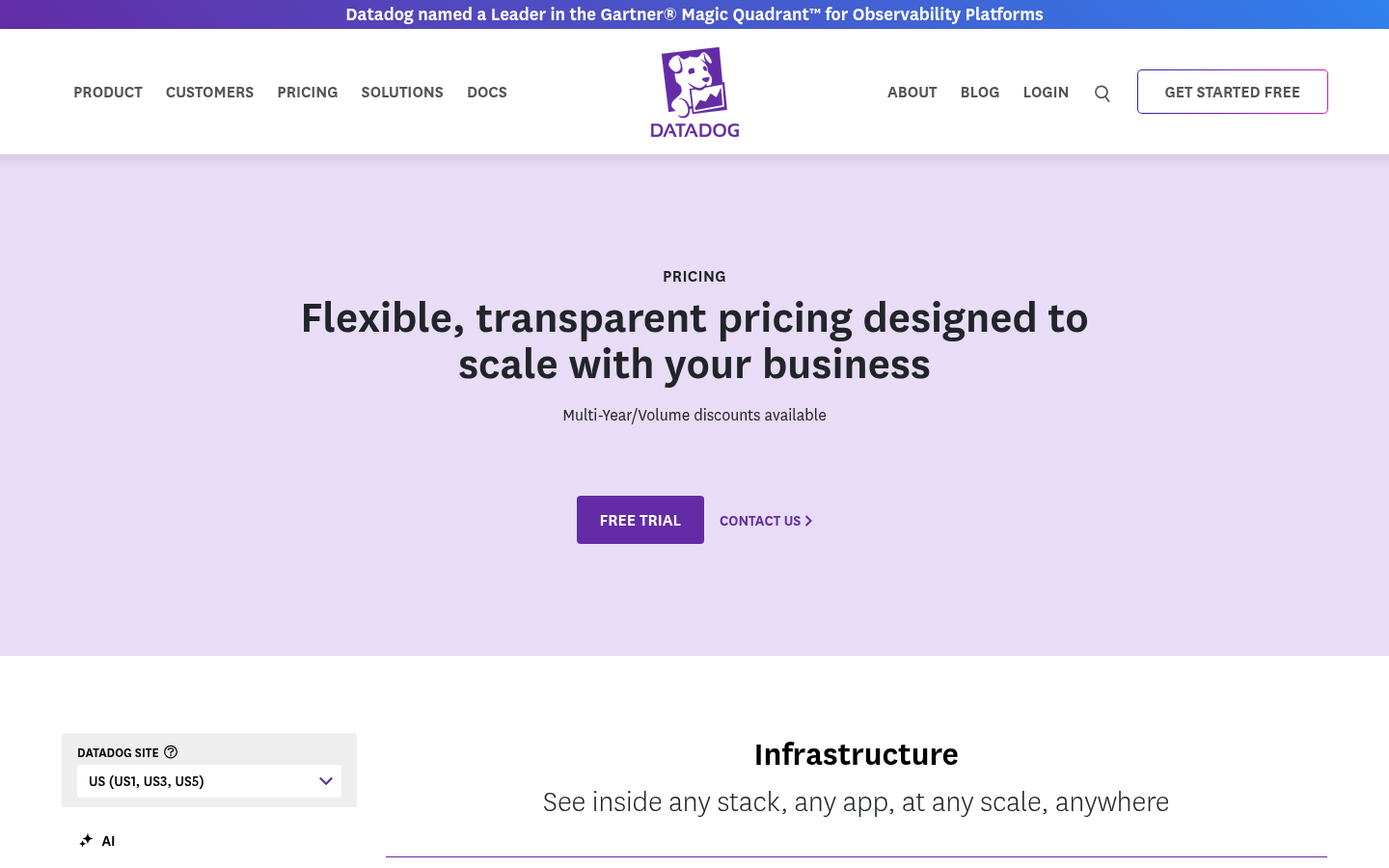
List prices checked on the live pricing page on 2026-10-05, three modeled team bills, and what the meters mean for debugging and onboarding.
Summary
Datadog pricing for a team that ships code starts at $15 per host per month for infrastructure and $31 for APM on annual billing, with logs, custom metrics, CI and Bits AI credits on top. Our modeled bills land near $700 a month for 10 hosts and $4,840 for 50. Users rate it highly, but the per-signal meters make cost hard to predict, and it changes how you debug and onboard.
Datadog pricing is fair for what you get at 10 hosts and punishing if nobody owns the meters at 50. List price is $15 per host for infrastructure and $31 for APM, so a 50-host team starts near $2,300 a month before logs. We score it 7.2/10: excellent time to value, weak cost predictability.
- Time to value
- 9/10
- Platform breadth
- 9/10
- Price predictability
- 4/10
- Cost at scale
- 5/10
- Dev workflow fit
- 7/10
- Easy to adopt: ease of use is the top positive theme on G2 (158 mentions)
- One platform for infra, APM, logs, RUM, CI and security with one query language
- Strong user ratings: 4.4/5 on G2 (731 reviews), 4.6/5 on Capterra (369)
- Per-host plus per-signal billing means one line item hides behind five others
- Custom metrics and log indexing are the usual sources of bill shock, with no hard spend cap on the list
- On-demand rates run 16% to 50% above annual rates, so month-to-month is a tax
Free plan up to 5 hosts, free trial on paid products
How this review was built
- Plan paid
- None. No paid plan purchased; public list prices only
- Version tested
- Public pricing page, product pages and docs as of 2026-10-05
- Test period
- 2026-10-04 → 2026-10-05
This is a pricing and workflow audit, not a hands-on load test. We did not run Datadog in production for this piece, so we publish no latency or detection-rate numbers. What we did: read every relevant line of the live pricing page on 2026-10-05, captured the product pages in a 1440 by 900 browser, aggregated public user ratings from five review sites, and built three monthly bills from list prices. Modeled bills assume annual billing, 1 KB per log event, every log indexed and no custom metric overage. Third-party billing claims come from competing vendors' blogs and are labeled. Screenshots are Datadog's public pages, not our account.
Should your team pay for Datadog?
YES if you...
- Teams of 10 to 40 engineers who want infra, APM and logs without running three tools
- On-call rotations where faster triage is worth a four-figure monthly line
- Teams that will assign one owner to the usage page and tag policy
NO if you...
- Teams under 5 hosts that only need metrics (the free plan fits better)
- Teams emitting high-cardinality OpenTelemetry metrics with no budget owner
- Anyone who needs a fixed annual number before signing, with no overage surprises
- Teams whose real problem is understanding source code
What Datadog charges, line by line
Annual billing list prices from the live pricing page, 2026-10-05. On-demand rates in brackets.
Infrastructure Free
Up to 5 hosts
- Core collection and visualization
- 1-day metric retention
- Good for a side project, not a team
Infrastructure Pro
$18 on-demand
- 100 custom metrics per host
- Enterprise is $23 ($27 on-demand), with 200 custom metrics per host
- DevSecOps Pro is $22 per host
APM
$36 on-demand with infra attached
- APM Pro is $35, APM Enterprise is $40
- Billed on top of infrastructure
- Error Tracking is included for APM traces
Log Management
Plus $1.70 per million indexed events
- Standard indexing keeps 15 days ($2.55 on-demand)
- Flex Storage is $0.05 per million events stored
- Forwarding to custom destinations is $0.25/GB
Bits AI credits
$1.30 per credit on-demand
- Consumed by Bits Chat, Bits Code, Bits Investigate, Agent Builder
- One credit is one unit of AI work
- Budget it like a metered API
ROI breakdown: Modeled with annual list prices: 10 hosts, 100 GB of logs and 8 committers cost about $704 a month, or $88 per engineer. 50 hosts, 1 TB of logs, 30 committers and 500 AI credits cost about $4,840 a month, or $161 per engineer. Logs are 37% of the second bill.
Hidden costs & gotchas
- Custom metrics above the per-host allowance, reported by third parties at $5 per 100 metrics a month
- Every OpenTelemetry metric is reported to bill as a custom metric (third-party analysis)
- Logs are paid twice: $0.10/GB to ingest, then $1.70 per million events to index
- On-demand billing adds 20% on infrastructure Pro and 50% on standard log indexing
- Per-committer products stack: CI Visibility $8, Code Security $40
Traces and logs in one pane
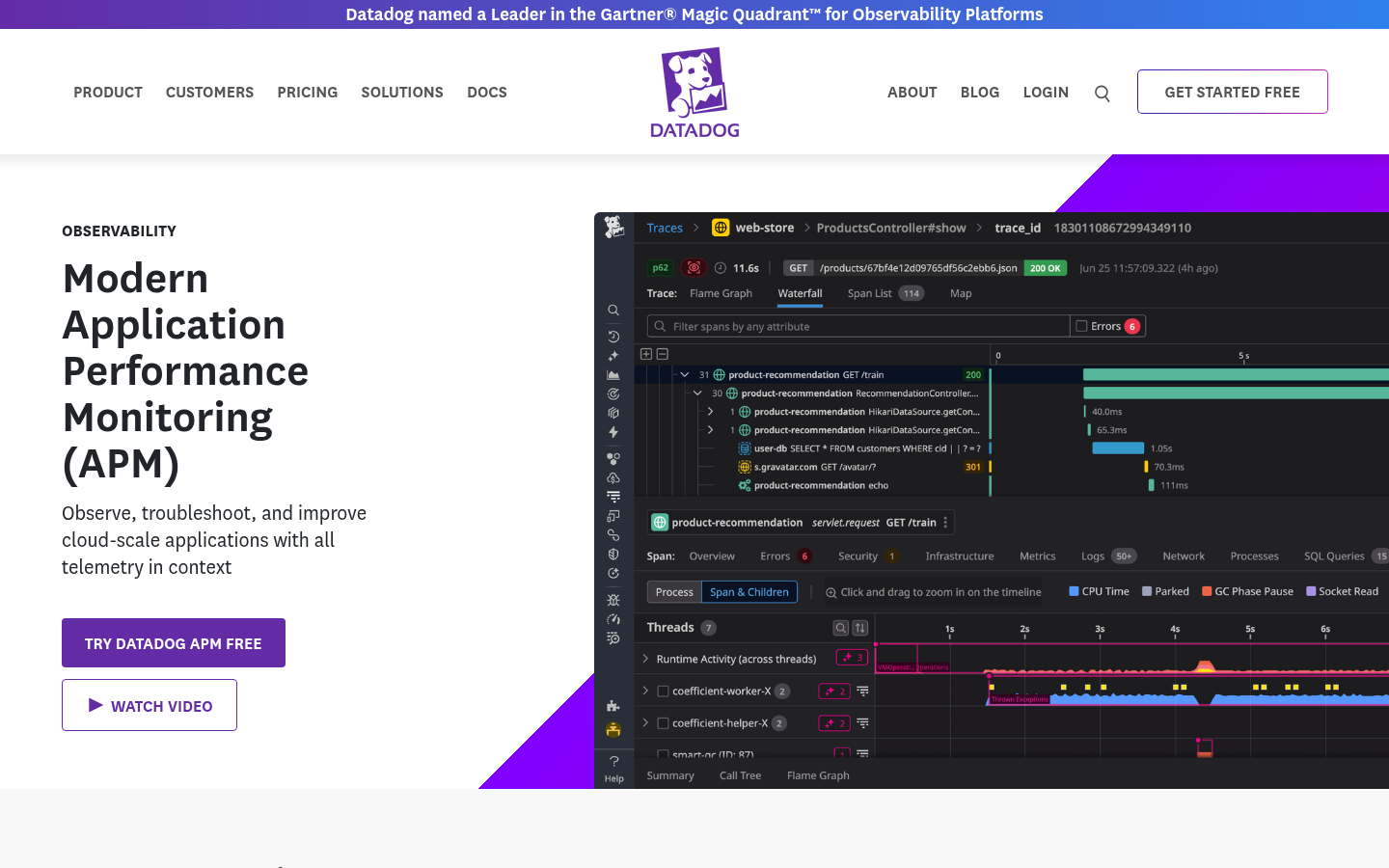
For a developer, the value sits in the trace waterfall. Datadog's APM page shows a request broken into spans, each linked to logs, infrastructure and SQL queries. That answers 'which service is slow' without opening three tools.
- Span-level drill-down from a slow request
- Logs and infra metrics attached to the same trace
- Billed per APM host
Natural-language log search, metered per event
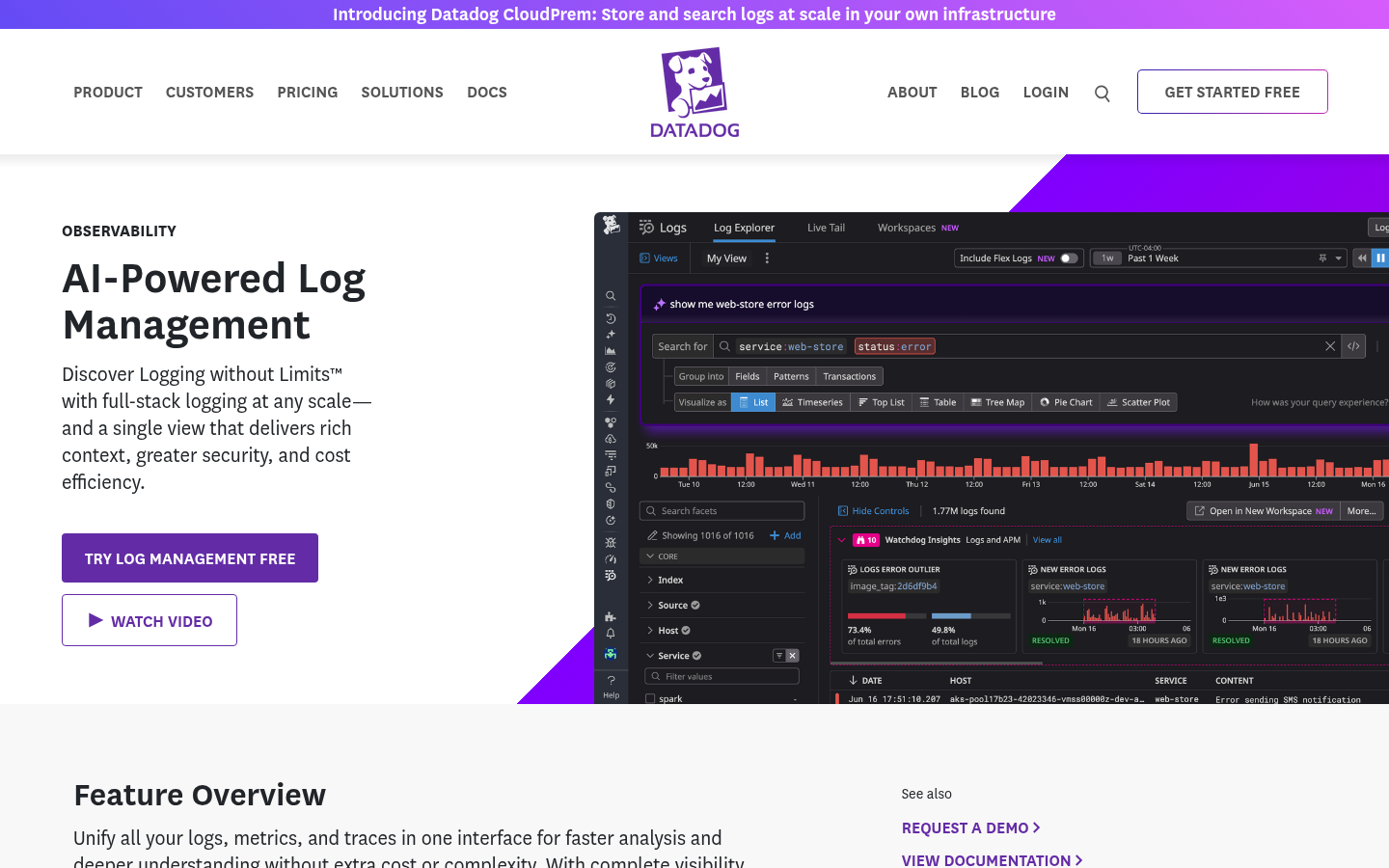
The Log Explorer accepts a plain sentence ('show me web-store error logs') and turns it into a query. It saves syntax lookups for newer engineers. The cost lever sits behind it: every indexed million events costs $1.70.
- Query assistant lowers the learning curve flagged in reviews
- Index only what you debug with
- Flex Storage is cheaper for logs you rarely read
The numbers behind the verdict
Prices come from the live pricing page. Bills are our model. Ratings are public snapshots, all taken 2026-10-05.
- Infrastructure Pro list price
- 15 $ per host per month Annual billing; $18 on-demand (+20%)
- APM list price
- 31 $ per host per month With infrastructure attached; $36 on-demand (+16%)
- Log indexing, standard
- 1.70 $ per million events 15-day retention; $2.55 on-demand (+50%); ingest is a separate $0.10/GB
- Modeled bill, 10 hosts
- 704 $ per month 100 GB logs at 1 KB per event, 8 committers on CI Visibility
- Modeled bill, 50 hosts
- 4,840 $ per month 1 TB logs, 30 committers, 500 AI credits, no custom metric overage
- Modeled bill, 200 hosts
- 20,160 $ per month 5 TB logs, 120 committers, 1,000 AI credits
- AI credit price
- 1.00 $ per credit, annual 500 credits for $500; $1.30 on-demand
- G2 rating
- 4.4 / 5 731 reviews; Expensive is the top con with 102 mentions
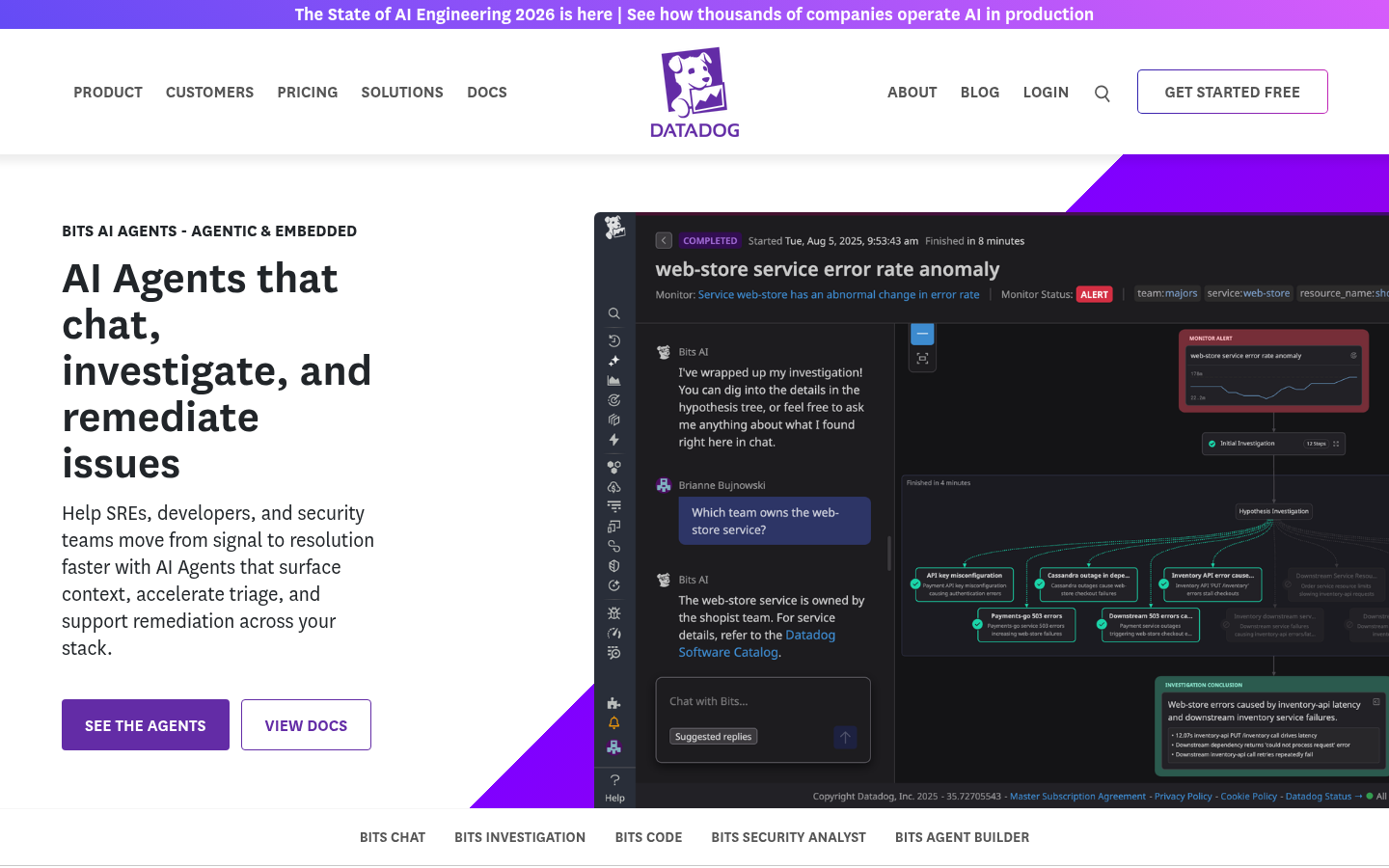
Which team owns the web-store service? (asked inside Bits AI during an error-rate alert)
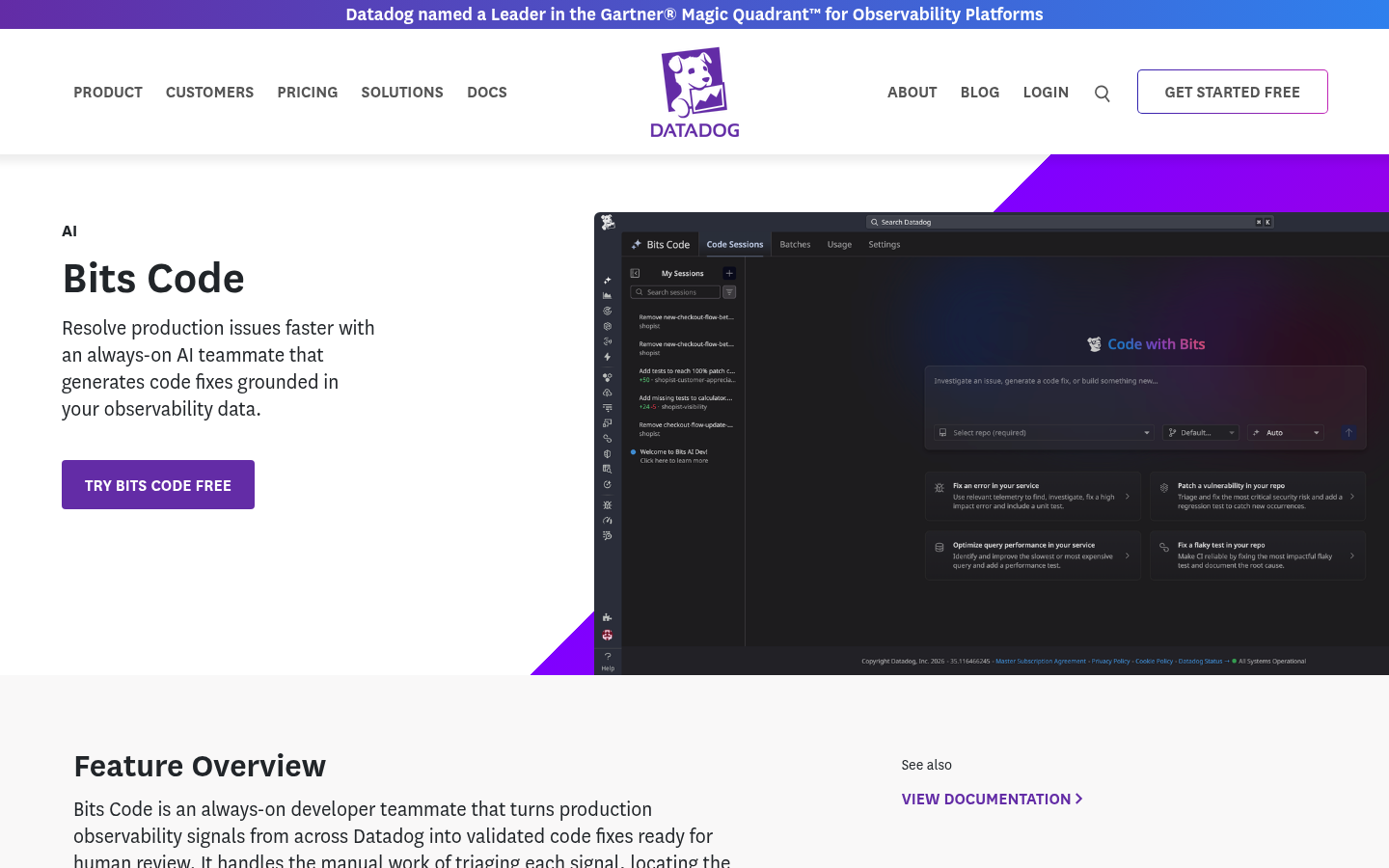
Fix an error in your service (Bits Code session starter)
Read the Pro plan price list for a 50-host team
Where Datadog earns the bill and where it does not
Pros
- Fast path from install to a useful dashboard Reviewers on G2 list ease of use as the top positive (158 mentions) and real-time monitoring third (122).
- One platform instead of a stitched stack Metrics, traces, logs, RUM, CI and code security share one UI, which cuts context switching during an incident.
- Dev-facing features keep arriving CI Visibility, Code Security, IDE integrations and Bits Code push observability closer to the pull request.
Cons
- Price is hard to forecast before you run it On TrustRadius the top con is an opaque, potentially high pricing model once ingestion grows. On G2, Expensive (102) and Pricing Issues (81) lead the negatives.
- Custom metrics and log indexing drive overruns Third-party analyses report custom metrics at up to 52% of some invoices, and logs are billed at ingest and again at indexing.
- SaaS only, so pricing changes are your problem There is no self-hosted option, which leaves you without a lever when meters are repriced.
- Learning curve shows up in reviews G2 lists Learning Curve at 75 mentions and TrustRadius flags query syntax and alert fatigue.
Worth it with an owner, risky without one
Datadog is the safe pick for a team that wants infra, APM and logs working this week. At 10 hosts the modeled bill is about $704 a month, and the engineering time saved on setup alone can justify it. At 50 hosts the same stack is about $4,840, and logs become the largest line.
The verdict hinges on governance. Teams that set an index budget, review custom metric tags and pick annual billing get a strong product at a fair price. Teams that turn everything on join the Reddit bill-shock threads.
For the dev workflow, Datadog explains production behavior: which service failed, who owns it, what a fix could look like. It does not explain your source code to a new hire. That gap is where a codebase chat tool sits, and the two do not compete. We would pay for Datadog once on-call pain costs more than the bill, and we would keep it away from any team without a cost owner.
- Time to value 9/10 Agent install to dashboards in minutes
- Platform breadth 9/10 Infra, APM, logs, RUM, CI, security
- Price predictability 4/10 Five meters, on-demand premiums
- Cost at scale 5/10 Logs are 37% of the 50-host model
- Dev workflow fit 7/10 Strong on debugging, light on code comprehension
Datadog pricing questions
How much does Datadog cost per month for a small dev team?
Is there a free Datadog plan?
What is the difference between annual and on-demand pricing?
How do Datadog logs get billed?
What are Bits AI credits?
Why do people complain about Datadog bills?
Does Datadog help new engineers understand a codebase?
Update log
- Initial publication: list prices verified on the live pricing page, ratings snapshot from G2, Capterra, Gartner Peer Insights, TrustRadius and Trustpilot.